Over the last decade, healthcare has undergone multiple shifts—telemedicine, online consultations, digital patient records, and mobile-first patient journeys.
But another transformation is quietly reshaping how patients discover doctors, and this time, it is happening faster than any previous wave.
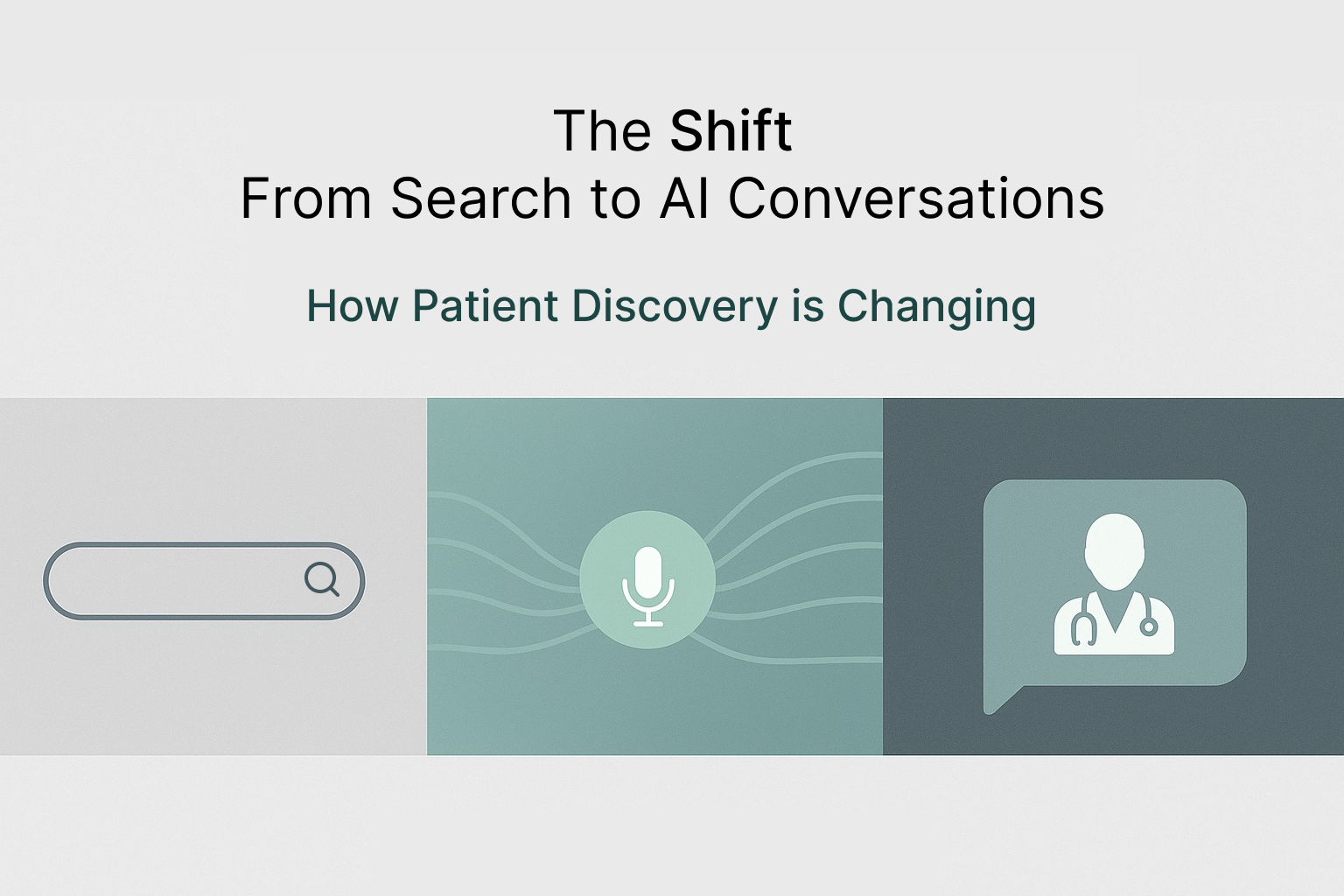
Patients have stopped searching only on Google. They are now asking AI models like ChatGPT, Google Gemini, Perplexity, Claude, and even voice assistants powered by LLMs.
In this new system, your discoverability depends on how well AI models understand you, trust you, and can confidently recommend you. This is where Generative Engine Optimization (GEO) enters the picture.
This blog will break down:
- What is Generative Engine Optimization?
- Why LLMs have become a major source of patient discovery
- What signals LLMs use to recommend doctors
- How doctors can optimize their practice for GEO
- The role of structured content, trust, and consistency
- How icareheal automatically prepare doctors for the GEO era
Let’s dive in.
1. Patients Are No Longer Searching the Old Way
For the last 20 years, Google dominated how people searched for healthcare. But 2024–2025 changed everything.
Today, patients ask questions like:
- “Who is the best spine specialist near me?”
- “Which Mumbai pain doctor is good for nerve blocks?”
- “Recommend a cardiologist who handles stent follow-ups.”
- “Which doctor is good for treating slipped disc without surgery?”
These are not keyword searches.
These are conversation-level queries.
And conversational queries are answered best by LLMs, not search engines.
Why patients prefer LLMs:
- Precise, personalized answers
Instead of showing websites, LLMs give direct recommendations. - Summaries instead of long reading
Patients get quick, simplified answers rather than navigating multiple links. - Trust and clarity
LLMs explain conditions, risks, and doctor choices without medical jargon.
This means:
If LLMs do not know you exist, patients will not find you.
Your static website alone will not make you discoverable.
Your Google Business profile alone will not make you discoverable.
Your social media alone will not make you discoverable.
You now need GEO. This means a constant work on these to answer Conversation Led Queries.
2. What is Generative Engine Optimization (GEO)?
Generative Engine Optimization (GEO) is the process of making your digital identity, practice information, expertise, and content LLM-readable, LLM-friendly, and LLM-recommendable.
Unlike SEO (Search Engine Optimization), which focuses on Google ranking, GEO focuses on how AI models understand and recommend you.
GEO ensures that AI models can:
- Correctly identify your specialty
- Understand your treatments and conditions treated
- Map your location and practice timings
- Know your experience and credentials
- Recognize what patients you serve
- Trust your profile enough to recommend you
If SEO is about keywords, clarity, and structure, GEO removes keywords and add context, trust, and consistency to it.
3. How LLMs Decide Which Doctors to Recommend
LLMs do not “search” the internet in the traditional sense.
They infer, connect, and recommend based on multiple signals.
Here are the 10 key signals that LLMs use to decide whether to recommend a doctor:
Signal 1: Structured and Clear Digital Profile
LLMs need structured information, not ambiguous paragraphs.
Example:
- “Dr. X is a pain doctor with experience” → too vague
- “Dr. X specializes in spine pain, nerve blocks, disc prolapse, knee arthritis, and cancer pain management” → LLMs can match it with patient queries
Signal 2: Consistency Across Platforms
If your specialty is written differently on various platforms, AI loses confidence.
- Website: Pain Specialist
- Google: Spine Doctor
- Listing sites
- Instagram: Regenerative Medicine Specialist
This inconsistency reduces trust.
Signal 3: Detailed Specialty Pages
LLMs prefer doctors with clear pages like:
- Back Pain Treatment
- Sciatica Treatment
- Knee Pain Treatment
- Cervical Spondylosis Management
- Disc Prolapse (PIVD)
- Joint Injections
- Cancer Pain Therapy
Each page boosts discoverability for that specific query.
Signal 4: Clear Treatment List
AI models need to understand exactly what you do.
Examples:
- Epidural injections
- Facet joint injections
- Nerve root blocks
- Radiofrequency ablation
- PRP therapy
- USG-guided injections
This helps match doctor expertise with patient symptoms.
Signal 5: Reviews and Reputation Signals
LLMs look for:
- Recent reviews
- Positive sentiment
- Consistent patient feedback
They use these to decide whether to recommend you. These are to be shown across your listing profiles, including websites
Signal 6: Recency of Content
Outdated profiles reduce LLM confidence.
Fresh content signals that the doctor is active and trusted.
This is where icareheal’s Website Editor becomes a major advantage. You can update your website in seconds and with built-in AI assistance, the editor even helps generate structured, GEO-friendly content instantly. No technical effort, no delays, and no need for external support.

Signal 7: Bio and Credentials
A strong doctor bio is crucial:
- Education
- Fellowships
- Hospitals worked at
- Experience in years
- Procedures performed
These help LLMs verify expertise.
On the icareheal platform, all these details are displayed in a clean, structured, LLM-friendly format on the doctor’s page, making it easier for AI models to correctly interpret your qualifications and match you to relevant patient queries.
Signal 8: Location and Accessibility
AI must understand your:
- City
- Clinics
- Consultation hours
- Online consult availability
This supports queries like:
“Pain specialist available near Indirapuram now.”
icareheal makes this effortless by displaying precise clinic locations with map directions, multiple practice centres, and individual consultation timings in a structured, LLM-friendly format.
Each location automatically includes booking options, allowing patients to schedule appointments directly through the app or website without confusion.
Signal 9: Patient Education Content
LLMs scan structured content like:
- FAQs
- Short articles
- Condition explainers
- Treatment explainers
These boost GEO immensely.
icareheal gives you
Readymade, structured FAQs and condition explainers built into your service pages—exactly the format LLMs prefer.
Freedom to write your own articles and updates through the Website Editor.
Built-in AI assistance ensures every update stays easy, clear, structured, and GEO-friendly.
Signal 10: Trust Signals Across Web
These include:
- News mentions
- Hospital affiliations
- Memberships
- Certifications
These increase your authority in the LLM’s reasoning
5. How Doctors Can Implement GEO in Their Practice (Step-by-Step)
Here is a practical action checklist for doctors.
Step 1: Build a Structured Digital Profile
Your profile must be:
- Comprehensive
- Updated
- Structured
- Clear
- Machine-readable
Include:
- Specialties
- Conditions treated
- Treatments offered
- Clinic locations
- Education & experience
- Consultation modes
Step 2: Write Clear, AI-Friendly Specialty Pages
LLMs prefer clarity and specificity.
Example specialty pages:
- Back Pain Management
- Knee Pain Management
- Neuropathic Pain Treatment
- Sciatica Treatment
- Slip Disc / PIVD Treatment
- Arthritis Care
- Cancer Pain Management
Each page should have:
- Symptoms
- Causes
- When to see a doctor
- Treatment options
- Your specific expertise
Step 3: Publish Structured FAQs
LLMs love FAQ-style content.
Add questions like:
- “When should I consult a pain specialist?”
- “Is non-surgical treatment available for disc prolapse?”
- “Which injections help with knee arthritis?”
- “Can neck pain be treated without surgery?”
These directly match patient queries.
Step 4: Keep Your Profiles Consistent
Ensure your:
- Website
- Google profile
- Practo
- Social pages
- Online listings
…all show the exact same specialties and expertise.
Step 5: Encourage Patients to Write Real Reviews
LLMs evaluate:
- Frequency
- Recency
- Sentiment
Ask patients to mention what treatment helped them, e.g.:
- “Sciatica nerve block helped me walk again.”
- “Disc prolapse treatment gave me relief.”
These details improve LLM understanding.
Step 6: Create Structured Patient Education Content
Publish:
- Short explainers
- Infographics
- Myths vs Facts
- Treatment queries
- Case studies (de-identified)
LLMs absorb structured information and use it to recommend you.
Step 7: Be Consistent with your digital presence
Freshness matters.
Update:
- Timing- 60 days
- Photos – 6-8 photos /month
- Short articles – 4-6 /month
- Reviews – 4-6 /month
This boosts credibility inside LLM models.
Step 8: Make Sure Your Website Is LLM-Readable
This requires:
- Clean structure
- Proper headings
- JSON-LD schema
- Structured data
- Clear tags for specialties
A messy site decreases recommendations.
6. Why GEO Is a Huge Opportunity for Doctors
Unlike SEO—which is expensive, slow, and dominated by hospitals—GEO is still new.
Which means:
Doctors who optimize early will dominate AI recommendation engines.
If you become the most structured, clear, trustworthy profile in your specialty and city, LLMs will prefer recommending you over others.
Because LLMs prefer clarity > popularity.
This is a massive advantage for:
- Independent doctors
- Specialists
- New clinics
- Subspecialists
- Doctors who want to beat large competitors
For once, discoverability does not depend on marketing budgets.
It depends on how AI understands you.
7. How icareheal Helps Doctors Become Discoverable in the GEO Era
Most doctors cannot manually:
- Create structured specialty pages
- Write optimized medical content
- Maintain consistent online presence
- Add schema & structured data
- Update profiles every 60 days
- Manage reviews
- Build treatment libraries
- Maintain multi-location structured data
But icareheal does all of this for you, automatically.
icareheal helps doctors with:
- AI-optimized digital clinic
- Structured treatment pages
- Updated bio & expertise
- LLM-friendly content formats
- Consistent, clean profile metadata
- Review management
- Updated clinic timings
- LLM-ready schema
- Automatic GEO-friendly posts
- Everything needed to be discoverable on AI platforms
icareheal essentially builds and maintains your AI-first digital identity.
Conclusion: GEO Is Not Optional Anymore—it Is Your New Digital Lifeline
Patients no longer “search”—they ask AI.
LLMs are becoming the first point of medical advice for millions.
And if LLMs cannot understand your expertise, structure your information, and trust your profile, they will never recommend you.
Doctors who prepare for this shift will dominate the next decade of patient discovery.
Those who do not will gradually disappear from patient consideration.
GEO is not marketing.
It is not SEO.
It is not optional.
It is the new foundation of digital discoverability.
And the time to start is Now!